By Paul Batchelor · 10 March 2026
Corporate Event Videography: Everything You Need to Know Before Your Next Big Event
Let's be honest, most corporate events cost a lot of money. The venue, the catering, the guest management, the travel. And yet, one of the biggest things that determines whether all that investment actually lands? The quality of the video and audio production on the day.
It sounds obvious when you say it out loud. But time and time again, production gets treated as an afterthought, something to sort once everything else is confirmed. And that is exactly where things go wrong.
Whether you are planning a company conference, a product launch, an awards ceremony, or a client-facing event, this guide walks you through everything you need to know about getting the production right — from the screens and sound to the cameras, lighting, and the people who make it all work.
Why Production Quality Changes Everything
Think about the last event you attended where something felt off. Chances are it was not the venue or the food. It was the sound cutting out, a screen you could barely see, or a presentation that looked blurry and amateurish on a big display.
Poor production does not just make an event look bad — it actively undermines the credibility of everything it is supposed to support. A powerful keynote delivered through a tinny speaker and captured on a single fixed camera tells the audience, without saying a word, that this was not a priority.
The good news? Getting it right is not as complicated as it might seem — as long as you know what you are looking for.
A professional audio visual production service handles all of this for you. The right team brings the experience, the equipment, and the coordination to make your event look and sound like it was designed to impress — because it was.
The Screens: Why LED Walls Have Changed the Game
Not long ago, most corporate events used projectors. They were fine. Not great, but fine. Then LED video walls came along — and there is genuinely no comparison.
Here is why LED has become the standard for serious corporate events:
- Brightness that actually works — LED walls perform brilliantly even in rooms with high ambient light. Projectors wash out. LED do not.
- Colour that pops — the image quality, contrast, and colour accuracy of a modern LED wall makes presentations and video content look genuinely vivid
- No throw distance required — forget having a projector in the middle of the audience creating shadows and noise
- Completely flexible sizing — LED walls can be built in almost any shape or dimension to suit the specific venue and stage design
- Pixel pitch options — finer pixel pitch for close-up indoor viewing, larger pitch for big distances or outdoor use
If your event has presentations, live camera feeds, or any kind of video content, the screen is the first thing to get right. LED display screen rental is more accessible than most people think — and the impact it makes is immediate.
The Sound: The Thing Most People Remember When It Goes Wrong
Here is a truth that every experienced event producer knows: audiences will forgive a lot of things. Imperfect visuals, a slightly delayed start, a venue that is a touch too warm. But bad audio? That they remember.
Feedback squealing through a microphone. A presenter you can barely hear past row five. Music that distorts the moment the volume goes up. These are the things that stick.
Professional sound system hire is not just about having bigger speakers. It is about having a system that is designed for your specific venue, the shape of the room, the ceiling height, the reflective surfaces, the background noise environment — and operated by someone who knows what they are doing.
What a proper audio setup for a corporate event includes:
- Line array speaker system sized for the venue and audience capacity
- Subwoofers for events with music content
- Front fill speakers for the audience right at the front of the stage
- Delay speakers for larger venues where one PA cannot cover the full distance
- Professional digital mixing console
- Wireless microphone systems — lapel, handheld, or podium depending on the programme
- An experienced live sound engineer managing it all in real time
That last point matters more than most people realise. The audio equipment hire is one part of it — but the engineer who is running the desk, managing the mics, and responding to whatever the programme throws at them is what makes the difference between a clean event and a stressful one.
The Cameras: Capturing What Happens on the Day
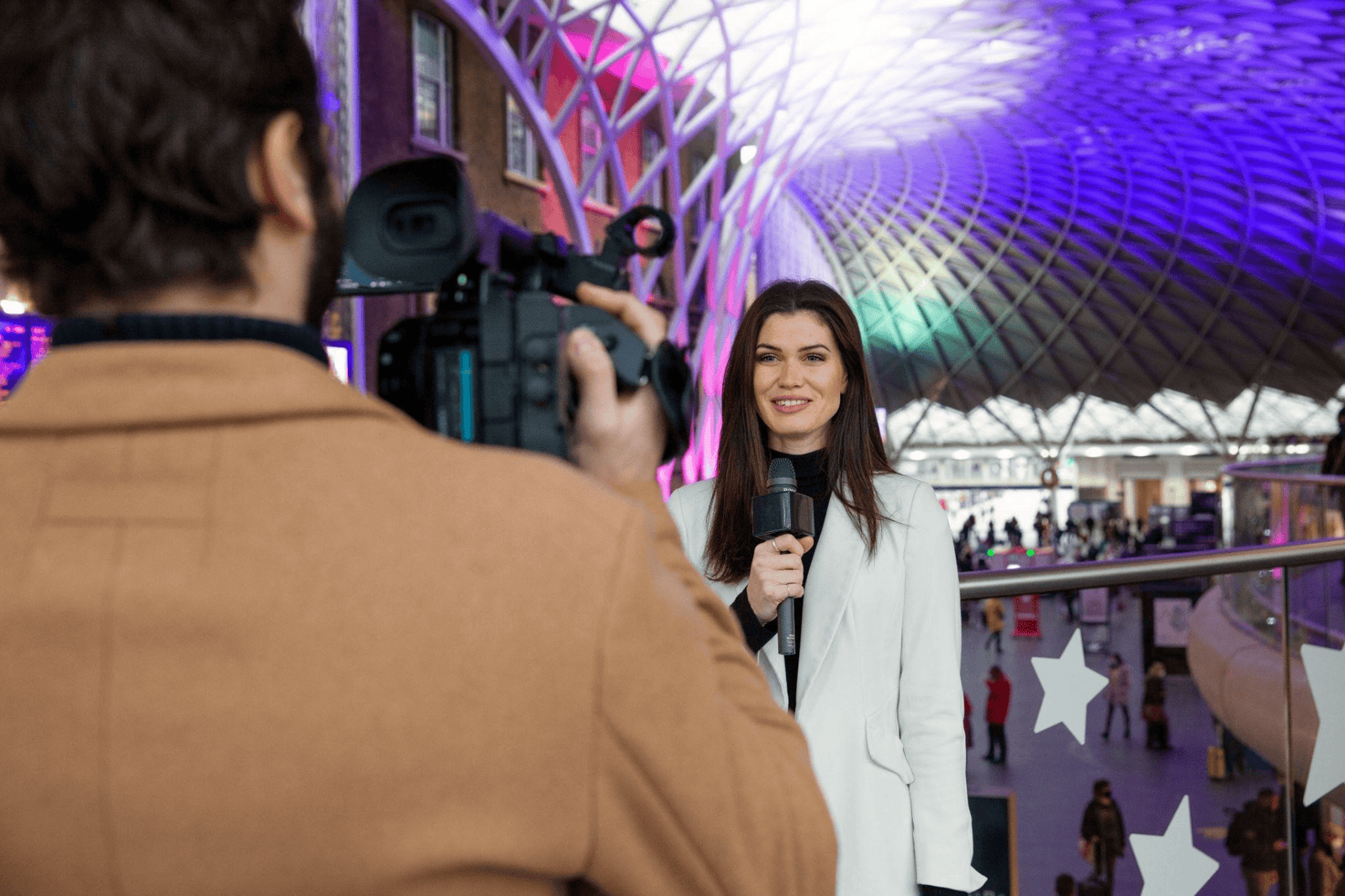
Corporate event videography serves two purposes simultaneously. In the room, it feeds live camera footage to the screens — keeping the audience visually engaged with close-up shots of presenters, panel discussions, and key moments. After the event, it provides the footage that gets edited into content you can actually use.
For live production, multi-camera coverage is the standard:
- Multiple camera operators capturing different angles at the same time
- A vision mixer selecting between feeds in real time — just like a broadcast studio
- The result is a dynamic, engaging visual experience for everyone in the room
For smaller events, a single high-quality camera operator capturing clean footage for post-production is often entirely appropriate. The key is matching the camera specification to the scale of the event and how the footage will be used afterwards.
Either way, a few fundamentals always apply — stable shots, correct exposure for the lighting conditions, and audio captured directly from the sound desk rather than from the camera's built-in microphone.
Lighting: The Most Underestimated Element
Ask most event planners what lighting does and they will say "it makes it look nice." That is true — but it is also a significant understatement.
Lighting does several distinct things at a corporate event:
- Stage wash — ensures speakers are evenly and flatteringly lit, which matters enormously for both the live experience and the camera footage
- Architectural lighting — transforms the character of a venue, creating atmosphere and reinforcing brand identity through colour
- Gobo projection — projects logos, patterns, or text onto surfaces for branded environmental design
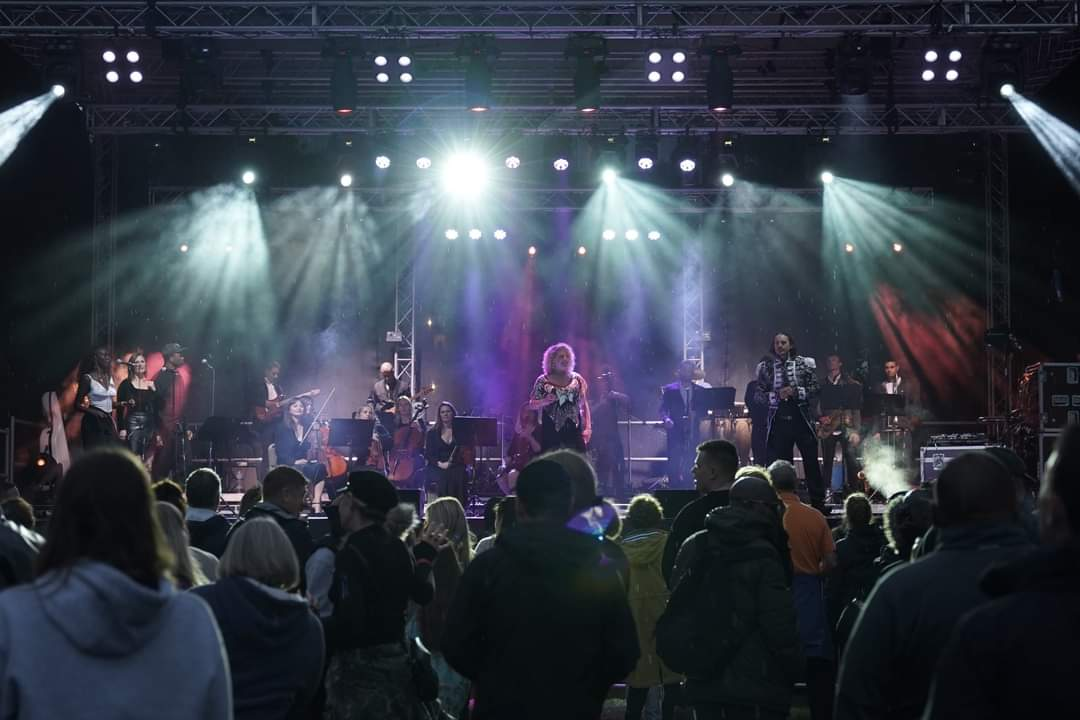
- Effects lighting — beam effects, haze, and dynamic colour changes that create the visual energy separating a premium event from a functional one
Concert lighting technology is now routinely used for corporate events; the moving heads and intelligent fixtures that were once reserved for music tours are now entirely standard for conferences and product launches. And for any event where the footage is going to be used afterwards, the lighting also needs to be designed with the cameras in mind — correct colour temperature, no hot spots, no shadows across the stage.
The Stage and Power Supply: Getting the Infrastructure Right
Everything above — the screens, the sound, the cameras, the lighting — needs something to sit on. The staging and the power supply are the infrastructure that holds it all together.
Outdoor stage hire ranges from simple presentation risers for indoor conferences to fully engineered outdoor structures capable of handling major production loads. Choosing the right configuration means accounting for the size of the programme, the weight of the equipment, and the sight lines from every part of the audience.
For outdoor events especially, power is the thing that catches people out. Most outdoor venues cannot provide the clean, stable power that professional audio, lighting, and LED equipment requires. Event generator hire solves this — providing a known, correctly sized power supply with the redundancy built in to handle whatever the production needs.
Working With a Production Company: What to Look For
The simplest way to get corporate event production right is to work with a company that takes end-to-end responsibility for its design, delivery, build, operation, and breakdown. No coordinating between separate suppliers. No gaps in responsibility when something needs to be solved quickly.
A professional live event production team brings:
- Experience designing production specs that fit the venue, the programme, and the budget
- A technical team — engineers, operators, technicians — who work together regularly and know how to coordinate in a live environment
- The equipment inventory and logistics to deliver and run a complete production efficiently
- The problem-solving experience that comes from having done this hundreds of times
Corporate event equipment hire with a full operating crew is almost always preferable to dry hire for corporate events; the equipment is only as good as the people running it.
Getting Your Content Ready: The Bit Most People Leave Too Late
The quality of what is on the screen matters just as much as the quality of the screen itself. Presentations prepared without thinking about the display environment consistently underperform on a large LED wall.
A few simple rules that make a significant difference:
- Design presentations in 16:9 format at 1920×1080 resolution or higher
- Use high-resolution images only — low-res images pixelate badly on large displays
- Keep text big enough to read from the back of the room
- Deliver all content to the production team well in advance — not the morning of the event
- Provide video content in the correct format for the media servers being used
After the Event: Making the Footage Work for You
The footage captured on the day has a life well beyond the event itself. A professionally edited highlight reel — typically two to four minutes long — can be used across social media, the company website, internal communications, and future marketing. Longer edits of keynotes or panel discussions are valuable for internal training and stakeholder communications.
The quality of that post-event edit depends entirely on the quality of what was captured on the day. Clean audio, stable well-lit footage, and coverage of the moments that matter — that is what gives the editor something to work with.
Pre-Production: Where the Quality Is Really Decided
The best-looking, best-sounding events are not made on the day. They are made in the weeks before, in the pre-production process.
Key pre-production steps that make the biggest difference — all part of thorough technical planning:
- Site visit — the production team assesses the venue in person: acoustic environment, ceiling height, power supply, loading access, and any physical constraints
- Programme review — understanding the running order, timing, and technical requirements of every section
- Technical rider review — understanding what any external speakers, performers, or presenters bring with them and how that integrates with the overall production
- Production schedule — realistic time allocated for build, sound check, lighting focus, rehearsal, show, and breakdown
Productions that are rushed through build and sound check consistently underperform compared to those with adequate preparation time. Pre-production is not an optional overhead; it is where the quality of the event is determined.
FAQ
How far in advance should I book a corporate event production company?
For significant events — conferences, award ceremonies, product launches — twelve to sixteen weeks in advance is advisable, especially for autumn and December. Leaving it to four to six weeks creates unnecessary pressure and risks equipment availability issues.
What is the difference between dry hire and full production service?
Dry hire means you get the equipment without operators, you set it up and run it yourself. Full production service means the company designs, delivers, builds, operates, and strikes the complete production with their own team. For most corporate events, full service produces significantly better results.
How do I know what size LED screen I need?
It depends on the venue dimensions, the furthest viewing distance, and the nature of the content. Your production company will advise after a site visit and programme review.
Do outdoor events need a generator even if the venue has mains power?
Usually yes. Site mains power is frequently insufficient for professional production loads in terms of both capacity and power quality. Generator power provides a clean, correctly sized, reliable supply.
What should event footage be used for after the event?
Highlight reels for social media and the website, full session recordings for internal distribution, training content, recruitment marketing, investor communications, and planning archives.
How do I brief a production company effectively?
Cover the event objectives, venue details, full programme with timings, budget parameters, any specific technical requirements, and the intended uses of post-event footage.
Keep reading
18 March 2026
Why Professional Sound Systems Matter at Events
4 February 2026
Event Production Company Overview: What Does a Professional Event Production Company Actually Do?
1 February 2026
How to Choose the Right Event Production Company in the UK
26 September 2025